Did you miss something? Keep Reading

Πέμπτη 16 Αυγούστου 2018

What’s up in the sky this August

The Planets in August 2018
In August we will be able to see all the planets in the Solar system.
Mercury
Mercury is currently hiding near the Sun, rising just a few minutes before sunrise. In the second half of August it will be easier to observe, rising earlier and earlier in the morning hours, reaching greatest western elongation on the 26th. This means the planet will be furthest away from the Sun and easiest to spot in the Eastern sky, rising at 4:39am, a whole 1 hour 45 minutes before the Sun.
Mercury as seen on 26th August 2018 at 4:39am. Image Credit: Heather Alexander/Stellarium/Armagh Observatory and Planetarium

The Moon and another eclipse
Technically our Moon is not a planet, but I’d like to include some information about its phases here. In the first days of August the Moon is Waning Gibbous, slowly melting away, rising later and later in the night. It reaches Last Quarter on the 4th and New Moon on the 11th August. On the 11th not only will the Moon be in the New Moon phase, but it will pass directly in front of the Sun, casting a shadow on the Northern parts of our planet and causing a partial Solar eclipse.
This eclipse will be visible in parts of Asia, Europe and North America. In the UK it will be visible from the Northernmost parts of Scotland. This eclipse is the third one in a month, following the partial Solar eclipse on the 13th July, and the longest total lunar eclipse for the century on the 27th July.
More information on the partial solar eclipse on the 11th August HERE. It is interesting to mention that this eclipse will occur exactly 19 years after the total solar eclipse of 1999, visible from most of Europe.
VenusVenus is visible in the Western sky shortly after sunset. The brightest planet will be setting about an hour after the Sun in the Western sky. Venus and the Moon will be closest together, or ‘in conjunction’, on the 14th August just after sunset.
Venus, Mars and Saturn as seen from the Armagh Observatory and Planetarium. Image Credit: Yanina Metodiva

Mars
Mars has just passed opposition, or its closest point to us, in the end of July. The Red Planet rises shortly after sunset and is visible throughout the whole night. For the next couple of weeks it will still be very close to us and, if you have a small telescope, you might be able to see some detail on the disk like the polar caps and some valleys across the center of its disk. Mars will be in conjuction with the Moon on the 23rd August.
Jupiter Jupiter is visible after sunset, setting around midnight in the beginning of the month. It will be moving closer to the Sun in the following weeks, setting earlier and earlier in the night. In the end of August, Jupiter will be setting just after 10pm. The biggest planet will be in conjunction with the Moon on the 17th.
Image Credit: NASA/JPL/Space Science Institute

Saturn
Saturn will be in the boundary of the constellation Sagittarius for the month of August, very close to the centre of the Milky way. This makes the planet very attractive for astrophotography. It will be visible for the majority of the night, setting around 2:30am in the beginning of the month, and around 00:30 towards the end of August. It will be in conjunction with the Moon on the 21st August.

The Perseid meteor shower – 13th August
Often I hear on the news or read in the paper that the Perseid meteor shower will be the best meteorite shower for this year. So first, I feel the need to explain the difference between a meteor, meteorite and meteoroid.
Most meteors come from small dust particles and fragments left behind from comets (or sometimes asteroids). Asteroids are big rocks and comets are basically large dirty snowballs flying through space. When a comet passes close to the Sun, some of its ice warms up and evaporates, creating a beautiful tail. During this process small dust particles are also blown away from its surface, leaving a small trail behind the comet.
Sometimes, if a comet crosses the orbit of the Earth, parts of its trail occasionally reach our planet. When a small grain of comet dust falls towards the Earth, it burns in the upper layers of our atmosphere. The flash of that burn we call a meteor, and the dust grain is the meteoroid. Every once in a while, a bigger fragment of the comet burns through the atmosphere and some of it reaches the Earth’s surface. The part that reaches the Earth is called a meteorite.
And now back to the Perseids.
Image Credit: Sky & Telescope
The Perseid meteor shower is the most attractive one for the summer. It is caused by debris left behind from comet Swift-Tuttle. During the peak (on the night of the 13th August), we will be able to see about 95 fast white meteors per hour that leave bright trails. Meteor showers always appear to be coming from the same point in the sky, and for the Perseids this point is in the constellation Perseus, hence the name. It will be above the horizon the whole night, so if you go out after dark and look towards the North-West, you will be able to spot a few meteors coming from that part of the sky. The Moon will be a very very thin crescent, just 2 days after New Moon, setting shortly after sunset leaving us with pitch black sky.
I do feel obliged to give you a few tips if you wish to observe and/or photograph the meteors.
First and foremost, bring very warm clothes with you. I know it is the middle of the summer and we have been enjoying some lovely warm weather, but if you do go out to observe a meteor shower, you’re lying still for hours at a time, your body cools down and eventually you get numb. I observe this shower every year, and every year I go out with at least 3 layers of warm winter clothes, a sleeping bag and a mat for under the sleeping bag. A flask with hot tea/coffee helps a lot.
Perseids Meteor shower. In the background we can see very distinctly The Plough, also known as The Big Dipper. Image Credit: Yanina Metodiva
When observing a meteor shower, I always have a torch with me, that has a red light. If you only have a white light one, stick some tape or paper to the front of it to dim its light. Red light doesn’t affect your night vision, allowing you to keep your eyes adjusted to the dark.
If you wish to photograph some meteors, I would recommend you to mount your camera on a tripod and leave it staring at the same patch of sky all night. I normally use  exposures of about 20-30 seconds, mid-to-high ISO, and I have a small remote that allows me to program my camera to take, say, 300 photos at such-and-such exposure time without me pressing the button every time. I always have a spare battery, and it is useful to know that your camera will inevitably became wet. The dew settles in around midnight or so, leaving all of your equipment wet, so keep everything you don’t use at the moment, in the camera bag (or any other waterproof bag). I also have a small tube made of cardboard that I put on my lens, it looks stupid, but it protects it from most of the dew. Check your camera once every hour or so to make sure it’s still shooting images, it’s dry, and the battery is not dead. And good luck!

A few brighter comets
 As we approach the autumn months, there will be several comets visible with binoculars or a small telescope.
21P/Giacobini-Zinner This comet was discovered in December 1900, and it has a period of about 6.6 years. 21P is a small comet, about 2km in diameter, and it will be closest to the Sun on the 10th September this year. It is still faint to be observed with binoculars, but in the coming weeks it will brighten up significantly.
For current position and brightness, check the following website: HERE.
38P/Stephan-OtermaThis comet was discovered in 1867. It has an orbital period of about 38 years, and it will reach perihelion on the 26thAugust 2018. It will be bright enough for binoculars or a small telescope. The comet will be closest to our planet in January 2019.
More information click HERE
46P/Wirtanen 
Comet 46P/Wirtanen was discovered in 1948, and is a short-period comet orbiting out Sun once every 5.4 years. 46P is now approaching perihelion, which will happen in early December. It is expected the comet to be bright enough to be seen with the naked eye, potentially reaching 3rd magnitude brightness. On the 16th December this year, the comet will make its closest approach to the Earth, of only 0.078 Astronomical Units (the distance between the Earth and the Sun), or 11.7 million km.
More information on its orbit and close approach can be found HERE.
A month without the International Space station.
For the month of August, the International space station will only have three visible passes above Northern Ireland. These are on the 1st, 2nd and 4th of August. Then the ISS will not appear again until the beginning of September. More information on when will it be visible above you on heavens-above.com (don’t forget to put in your coordinates there).
http://www.armaghplanet.com

Never ask an astronomer about....

so..hello Kyraikoupoli's friends! You all know how much Kyriakoupoli loves space and astronomy so we found an article of a fellow blogger that seems very interesting! Take a look and find out what NOT to  ask an astronomer...


Article written by: Heather Alexander

This article has been inspired by the many questions we get asked here at the Armagh Observatory and Planetarium. We love being asked questions but we thought it would be funny to have a look at the questions you really should never ask an Astronomer. We hope this gives you a bit of a laugh!


Can you name every star in the sky? 
This is a silly question to ask anyone, not just an astronomer. Yes, we know a lot of star names, but to know all of them is impossible. You have to realise that some stars have names such as VY Canis Majoris, which is easy to remember, but others have names that are just a series of letters and numbers, which is not so easy to remember. 
M13. Observed through binoculars this ‘fuzzy ball’ contains approximately 100 000 stars held together by their own gravity. Where open clusters contain mostly young stars and are more difficult to spot due to their loose structure, denser globular clusters like this one are composed primarily of different kinds of giant stars that are ‘in their old age’ and that have already completed their main sequence. Credit: Copyright: Martin Pugh/NASA
Can I have a look through your telescope? 
Common question and the answer is no. A lot of the time people think astronomers are sitting on chairs actually looking through telescopes, however that is not how it is done now. We have to gain access to the telescopes we require and then you remotely observe. You then get the results on your computer screen and you then have to decipher the data. It’s not as simple as looking through a telescope and seeing a star. Also do you know how long we’ve waited to get access to remotely observe? We’re going to be selfish and keep that to yourselves!  
The 22m diameter Mopra radio telescope, sited at the foot of Siding Spring Observatory in New South Wales, Australia. Here Armagh Director Michael Burton is pointing to the telescope, and provides a sense of scale for the size of the dish. No-one looks through the telescope, however! (Image credit: Michael Burton)
Is the Earth flat? 
You can ask this question but we’ll just walk away. Okay, we won’t just walk away, we will tell you why the Earth is definitely not flat, and then walk away. 
Image of Earth from Apollo 15
Big Blue: Earth photographed by the crew of Apollo 15. (Image credit: NASA)
What have you discovered lately? 
Our question to you is “well…what have you discovered recently?” We don’t discover new things every day. Sometimes our research can take years upon years to complete, if we even can complete it. If we discover something along the way, that is absolutely fantastic, name it after us and we will keep working on what we’ve been doing.  
Do you know (insert famous astronomer name here)? 
The field of astronomy and astrophysics is a much bigger field than you think. We may have heard of the person you’re referring to, and appreciate the work they do, but there is a chance we may never have met them.  
Brian Cox and Dara O Briain hosting the Sky at Night Show.
Have you ever been to space? 
We’re astronomers, not astronauts so sadly we have not been to space. It would be really cool though! 
image of the Mercury 7
Magnificent Seven: The lucky first astronauts recruited by NASA. Image credit: NASA)
Do you only work at night? 
You may be surprised to learn this but astronomers don’t only work at night! Some of us do, but most of the time we try and work a regular day, like everyone else.  
Did people really walk on the moon? 
You will get the same reaction to this question as you would to question 3. We will explain to you that people definitely did walk on the moon, and then walk away.  
This interior view of the Apollo 11 Lunar Module shows Astronaut Edwin E. Aldrin, Jr., lunar module pilot, during the lunar landing mission. This picture was taken by Astronaut Neil A. Armstrong, commander, prior to the Moon landing.
Can you name all the moons of Jupiter? 
This is a bit like question 1. Jupiter has 69 moons. Knowing every single one is a bit tricky. Some of us might know them all, and it’s a great party trick, but we need to be focusing more on our research and our particular area of interest.  
What was that thing I saw in the sky last night? 
Please do ask us this! One thing we will advise though is either try and take a photograph, or make sure you know exactly which direction you’re looking. The more information you can give us, the more likely we are to be able to answer this question. If it had red blinking lights, it was an aeroplane.  

space question 1- space fact 1

Where would a compass point to in space?


Josh Barker from the National Space Centre gets to the bottom of this interesting question for us.
Compasses work using magnetic fields. Here on Earth, a compass would point towards magnetic north. A compass will align its self with the strongest magnetic field in the region. This is why if you get a magnet and hold it close to a compass, it will change the direction it is pointing.
As you leave the Earth and move into space the magnetic field will get weaker. Even though the field is weaker, the compass can still align with it meaning that a compass on the International Space Station would still be a reliable guide to the North Pole.
If you choose to go further away, things would get a little more interesting. If you move far enough away from Earth you will reach a point where the Sun’s magnetic field will be stronger than the Earth’s. At this point, your compass would swap allegiance, and would begin pointing towards the Suns magnetic north pole.
Of course, if you were to send a compass right out into intergalactic space, the space between galaxies. Then you compass would probably not work at all. A stronger compass will detect fainter magnetic fields, but get far away enough from a magnetic source and your compass would not point anywhere.
Αποτέλεσμα εικόνας για space compass
https://www.spaceanswers.com

Κυριακή 12 Αυγούστου 2018

Vegetarian Architecture


Αποτέλεσμα εικόνας για carrots
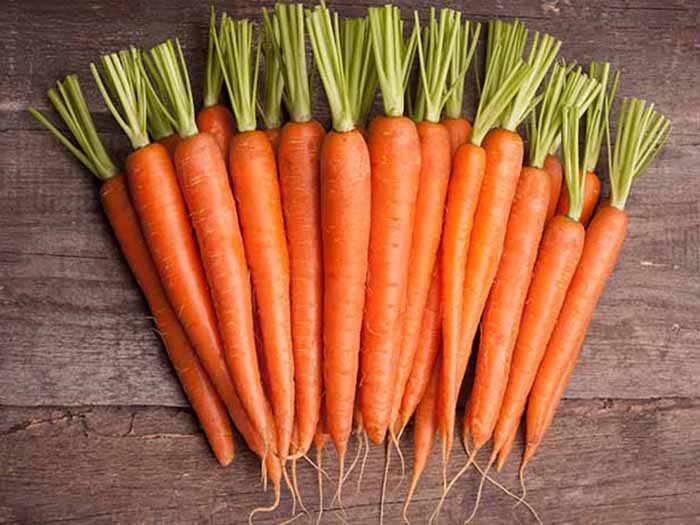
Concrete mixtures could be strengthened by adding nanoparticles extracted from carrots and other root vegetables, research currently underway at England's Lancaster University suggests.
Preliminary tests by the university's engineers found that "nano platelets" sourced from the fibres of these vegetables "significantly improved" the strength of concrete — and at a low cost.
The university now has £195,000 in funding from the European Union's Horizon 2020 programme to proceed with further research, in the hope that the results could help curb carbon emissions from the construction industry.
Novel cement reduces energy consumption and CO2 
"These novel cement nanocomposites are made by combining ordinary Portland cement with nano platelets extracted from waste root vegetables taken from the food industry," said engineering professor Mohamed Saafi, who is lead researcher on the project.
"The composites are not only superior to current cement products in terms of mechanical and microstructure properties but also use smaller amounts of cement. This significantly reduces both the energy consumption and CO2 emissions associated with cement manufacturing."
The thinking is that with stronger concrete, less of the material will be required for a building of the same scale.
Even a small reduction in quantity could make a big impact, given that the production of cement — the key ingredient in concrete — could account for as much as eight per cent of the world's total carbon dioxide emissions, according to recent statistics.
This is because carbon dioxide is a by-product of the chemical conversion that takes place during cement production. The process also requires the cement to be heated to very high temperatures, often via the burning of fossil fuels.
Material outperformed all available cements
In Lancaster University's early studies, the root vegetable nano platelets — which work by increasing the amount of calcium silicate hydrate, the primary substance that gives concrete its strength – outperformed all currently available cement additives. This includes more costly sources like graphene and carbon nanotubes.
The engineers were able to use 40 kilograms less Portland cement per cubic metre of concrete.
They are working with an industrial partner, sustainable materials companyCellucomp, on the research. Cellucomp already works with waste root vegetable fibres, with which it manufactures the additive Curran.
Wonder-material graphene has recently been touted as the future for stronger concrete, with studies from the University of Exeter showing it could make a composite more than twice as strong and four times more water-resistant than existing mixtures.
Σχετική εικόνα

https://www.dezeen.com/2018/08/09/carrots-concrete-stronger-lancaster-university-technology/#disqus_thread

Πέμπτη 19 Ιουλίου 2018

Γιατί ονομάζουμε τα καράβια ?


Γιατί ονομάζουμε τα καράβια ? 

Προ ολίγον ημερών, μια φίλη μου, η Κωνσταντίνα Ξ., με ρώτησε ρητορικά ίσως, «Γιατί ονομάζουμε τα καράβια». Της απάντησα μονολεκτικά, πεζά και χωρίς καθόλου δισταγμό, «για να μην τα χάνουνε οι ιδιοκτήτες τους σε περίπτωση τρικυμίας ή γιατί πρέπει να τα δηλώσουν στην εφορία». Πραγματικά δεν ξέρω αν όντως η απάντηση που έδωσα είναι σωστή, αλλά προσωπικά δεν είμαι καθόλου ευχαριστημένη από την απάντηση μου.

Τι πάει να πει «για να μην τα χάνουνε»! Έλεος! Που πήγε η φαντασία? Η ερώτηση της φίλης μου προφανώς άντεχε μια πιο ευφάνταστη και ανορθόδοξη απάντηση. Γι’αυτό λοιπόν αποφάσισα να δημιουργήσω αυτήν την ανάρτηση. Το θέμα διέγειρε την περιέργεια μου  αρκετά . Έκτοτε προκαλώ τον εαυτό μου σε έναν λαβύρινθο σκέψεων για αυτήν την απλή αλλά συγχρόνως τόσο σύνθετη ερώτηση «Γιατί ονομάζουμε τα καράβια». Προσπαθώ να ανακαλύψω πόσες απαντήσεις είμαι ικανή να σκαρφιστώ. Όσο πιο περίεργες και φαντασιόπληκτες τόσο το καλύτερο. Θα με βοηθήσετε στο πλέξιμο καραβιοπαραμυθιών?

Θα έχει πλάκα! Αυτο που ζητώ λοιπόν από εσάς είναι να μου γράψετε στα σχόλια/comments τις απαντήσεις σας σε αυτό το ερώτημα. Εάν δεν θέλετε να το γράψετε δημόσια τότε στείλτε το στο ηλεκτρονικό ταχυδρομείο του ιστολόγιου/blog μας
kyriakoupoliblog@hotmail.com και θα δημοσιεύσω όλες τις απαντήσεις μαζι!
Για να δούμε τι όμορφες ιστορίες είμαστε ικανοί να σκαρφιστούμε και σε ποια μαγευτικά μονοπάτια θα μας οδηγήσει αυτό! J

Σας γράφω κάποιες απαντήσεις που σκέφτηκα ή απαντήσεις που έλαβα από άλλους νέους όταν τους ρώτησα…είμαι σίγουρη πως μπορούμε να τα πάμε και καλύτερα! Για πάμε!

-Ονομάζουμε τα καράβια για να έχουμε συντροφιά στο ταξίδι μας δίνοντας υπόσταση στο μεταφορικό αυτό μέσο με το οποίο θα ταξιδέψουμε σε ατελείωτες περιπέτειες

-Για να μην χάνουμε ποτέ τον προορισμό μας. Βαπτίζοντας το καράβι μας με ένα όνομα που προφανώς αγαπάμε είναι σαν να ορίζουμε την δική μας Ιθάκη…τον πολυπόθητο προορισμό μας

-Το όνομα στο καράβι είναι το αντίστοιχο επίθετο των οικογενειών. Όπως ακριβώς μια οικογένεια έχει ένα επίθετο, έτσι και ένα πλήρωμα γίνεται μια οικογένεια με το καράβι τους.

-Ένα καράβι χωρίς όνομα είναι αδύνατον να πλεύσει σε ήρεμα νερά καθώς είναι σαν να μην υπάρχει, σαν να μην έχει υφανθεί η θαλασσινή του μοίρα. Με την  βάπτιση του καραβιού αρχίζει και το υφαντό του πεπρωμένου του από τα κοχύλια του βυθού.

Υ.Γ.    Για να λέμε τα σύκα σύκα και την σκάφη σκάφη, εύστοχο το ερώτημα της Κωσταντίνας Ξ., εσεις διερωτηθήκατε ποτέ? Και μάλιστα είναι και γυναικεία ονόματα τα περισσότερα καράβια…άκρως ενδιαφέρον. .τουλάχιστον για μένα…
Από πού ξεκίνησε άραγε αυτό? Για να το ψάξουμε..